Turn Insurance Claim Documents into Structured, Source-Verified Summaries
Why AI-powered claim summarization transforms insurance workflows
Source-Grounded Extraction
Every extracted field (claim number, loss description, reserve, etc.) is linked to the exact sentence in your original claim document. Click any field to see the source context—critical for audit and compliance.
Structured Data Ready for Systems
Output is a clean JSON object with all standard claim fields: claim number, policy number, insured, loss date, loss type, description, claimants, parties, coverage, damages, reserve, payments, status, and key issues. Directly import to claims management systems.
Automatic Field Mapping & Validation
AI identifies and normalizes claim data even from unstructured text—handling abbreviations, date formats, and currency. Reduces manual data entry and eliminates transcription errors.
How to generate a structured claim summary in 4 steps
1. Upload your claim document
Upload FNOL reports, adjuster notes, claim forms, or even scanned PDFs (OCR supported). You can also paste raw claim notes directly.
2. AI scans for claim data fields
Our AI detects claim number, policy number, insured names, loss dates, coverage types, damage estimates, reserve amounts, payment records, and status indicators—using natural language understanding tailored to insurance terminology.
3. Review and verify each field
The generated JSON summary displays each field with a 'source' button. Click it to highlight the original sentence in your document—ensuring full traceability for compliance and quality assurance.
4. Export and integrate
Export as JSON, CSV, or Excel. Directly integrate with claims management platforms via API, or copy the structured summary into your workflow.
Built for accuracy, auditability, and speed in claim processing
Extract from messy claim notes and reports
Handles varying formats—handwritten notes, adjuster narratives, email threads, and multi-page PDFs. AI reliably extracts structured fields even from inconsistent language.
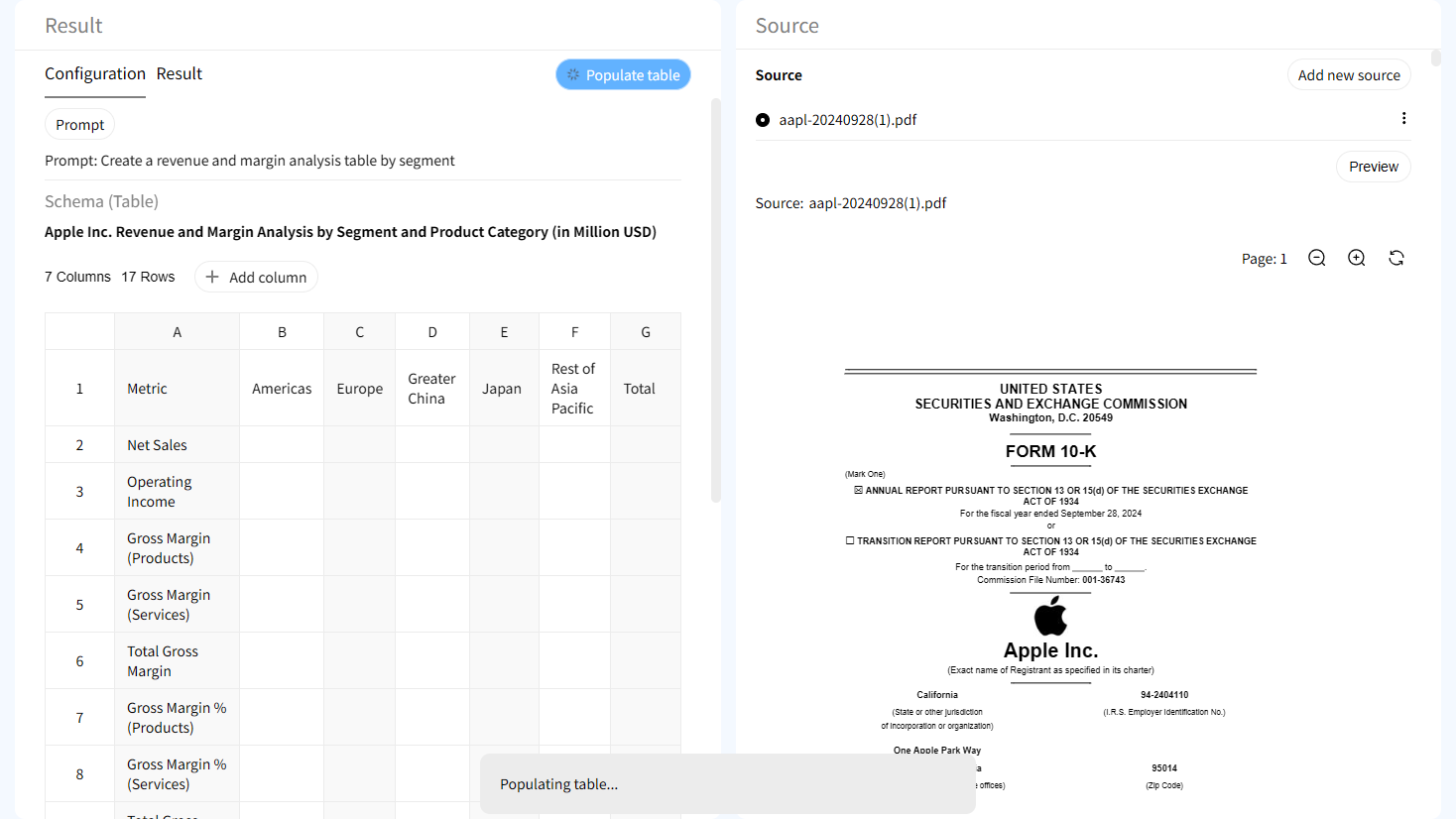
Source verification at the field level
Each field—from loss description to reserve amount—can be traced back to the original text. Disagree with an extraction? See the exact words that triggered it.

Interactive highlighting in source document
Click any field in the JSON summary and instantly jump to the corresponding segment in your claim document—perfect for audits, dispute resolution, and training.

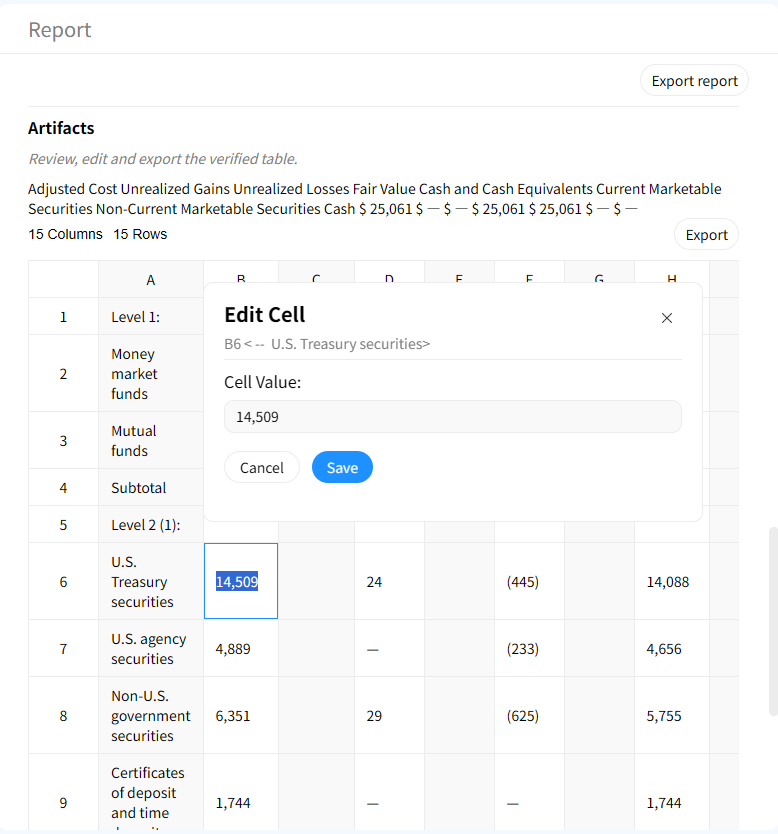
Human-in-the-loop refinement
AI suggests fields, but you remain in control. Edit, add, or remove fields before finalizing the summary. Merge duplicate entries or correct misinterpreted data with ease.
AI Claim Summarizer vs Manual Claim Data Entry
Manual Data Extraction
- • Hours of reading lengthy reports
- • Prone to missed or misread fields
- • No traceability to source
- • Spreadsheet errors and inconsistency
Gentables AI Claim Summarizer
- ✓ Summary generated in minutes
- ✓ Captures every key field accurately
- ✓ Source-grounded verification
- ✓ Standardized JSON ready for systems
Who benefits from AI-extracted claim summaries?
Claims Adjusters & Handlers
• Speed up claim intake and review
• Ensure no critical field is overlooked
• Improve consistency across claim files
Insurance Underwriters
• Review claim history with structured data
• Validate loss details and coverage decisions
• Reduce manual data entry errors
Compliance & Audit Teams
• Maintain audit trails of claim decisions
• Verify data accuracy against source documents
• Ensure regulatory adherence with traceable evidence
Frequently Asked Questions about AI Insurance Claim Summarizer
Stop manual claim data entry. Summarize with confidence.