Analyze Claims Against Policy Coverage with Source‑Grounded Accuracy
Why AI‑powered coverage analysis transforms claims and underwriting
Source‑Grounded Comparison
Every coverage finding—whether a coverage applies, a limit is exhausted, or an exclusion is triggered—is linked to the exact sentence in either the claim file or the policy document. Click any finding to see the supporting evidence.
Structured Analysis Ready for Review
Output is a clean JSON object with sections: Applicable Coverage, Limits, Deductibles, Conditions, Exclusions, Endorsements, and Identified Coverage Issues. Each section includes source references and risk flags.
Automatic Issue Detection
AI flags potential coverage gaps, limit exhaustion, deductible discrepancies, and exclusion applicability. Instantly see where coverage may be denied or reduced—supporting faster, more accurate coverage decisions.
How to perform a coverage analysis in 4 steps
1. Upload claim and policy documents
Upload the claim file (adjuster notes, loss report) and the relevant policy documents (declarations, endorsements, policy forms). You can upload multiple files.
2. AI extracts and compares key provisions
Our AI extracts claim details and policy terms—coverage types, limits, deductibles, conditions, exclusions, endorsements—then performs a side‑by‑side analysis to identify matches, gaps, and issues.
3. Review each finding with source evidence
The generated JSON analysis includes a 'source' reference for each finding. Click to highlight the exact sentence in the original document—ensuring full traceability for coverage opinions.
4. Export and use for decision‑making
Export the structured analysis as JSON for integration with claims systems, or as CSV/Excel for reporting. Use the findings to support coverage determinations, denial letters, or reserve adjustments.
Built for accuracy, transparency, and confident coverage decisions
Analyze against multiple policy sections
AI handles complex policies with multiple coverage parts, endorsements, and exclusions. It cross‑references claim facts with each policy provision, ensuring a comprehensive analysis.
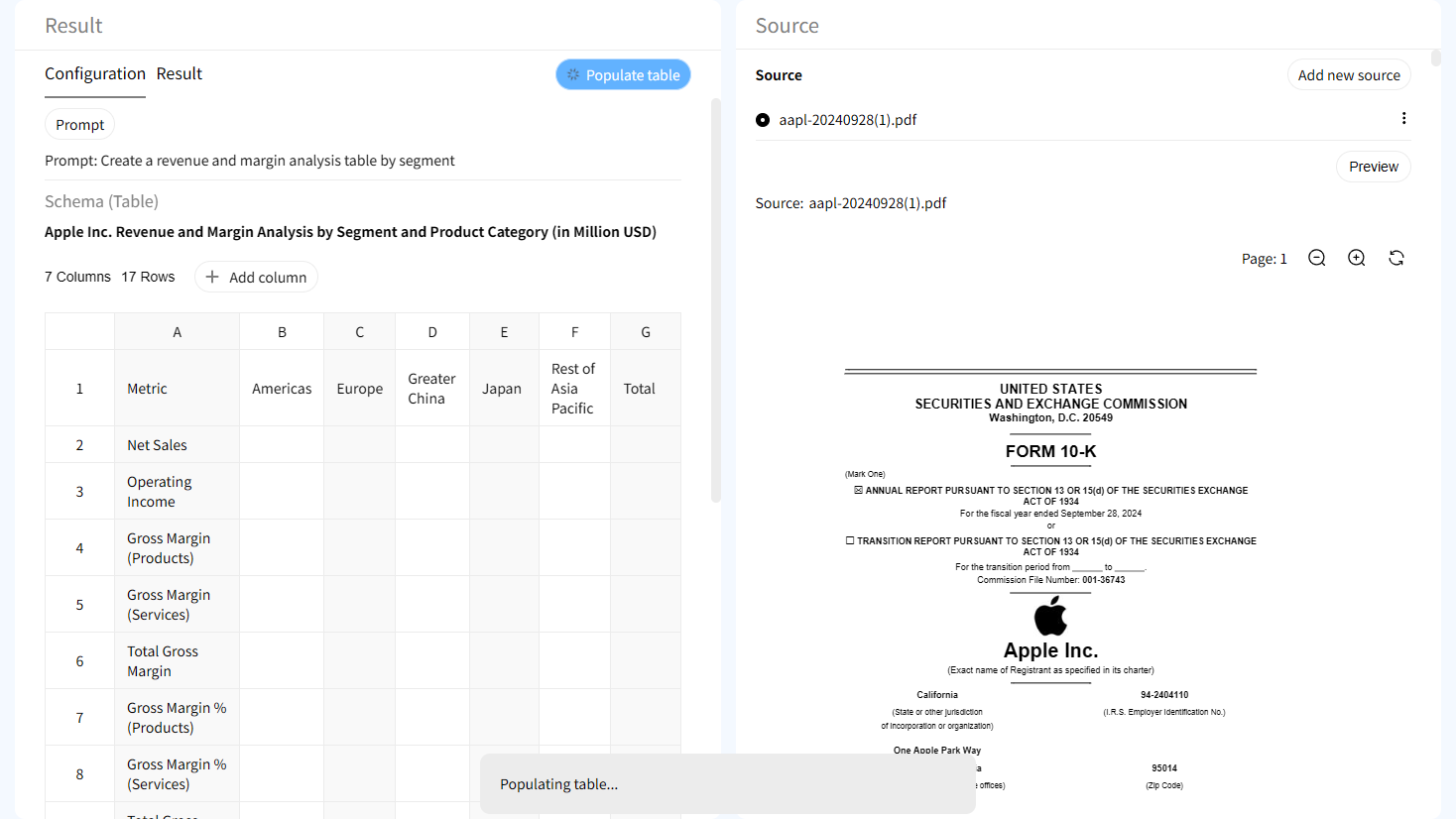
Source verification at the finding level
Each coverage finding—whether it's a coverage grant, limit, exclusion, or condition—is backed by direct source citations. Resolve disputes with confidence.

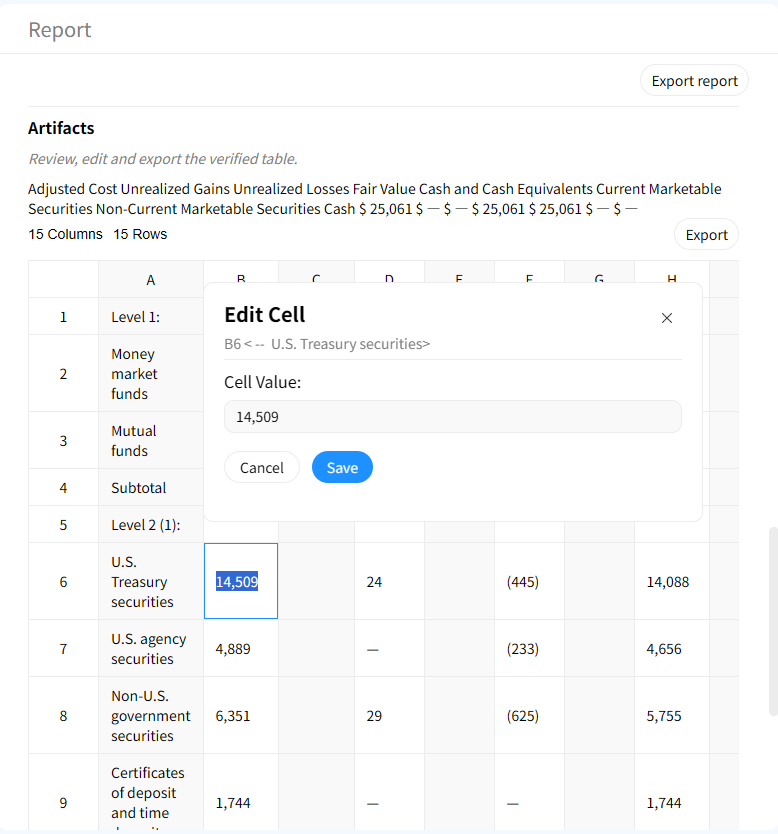
Interactive highlighting in source documents
Click any analysis element and instantly jump to the corresponding section in the claim or policy document—perfect for audits, coverage opinions, and litigation support.

Human‑in‑the‑loop refinement
AI provides a draft analysis, but you remain in control. Add findings, override interpretations, or flag additional issues before finalizing the coverage assessment.
AI Coverage Analysis vs Manual Coverage Review
Manual Review
- • Hours of reading policies and claim files
- • Prone to missed exclusions or limit overlaps
- • No traceability to source
- • Subjective interpretation without evidence
Gentables AI Coverage Analyzer
- ✓ Analysis completed in minutes
- ✓ Identifies every relevant provision
- ✓ Source‑grounded verification
- ✓ Structured, auditable findings
Who benefits from AI‑powered coverage analysis?
Claims Adjusters & Examiners
• Quickly determine coverage applicability
• Identify potential denial triggers
• Support reserve decisions with evidence
Coverage Counsel & Legal Teams
• Prepare coverage opinions with traceable sources
• Validate exclusion applicability
• Strengthen litigation positions
Underwriters & Risk Managers
• Review policy wording effectiveness
• Identify frequent coverage gaps
• Improve policy design and pricing
Frequently Asked Questions about AI Insurance Coverage Analysis
Stop guessing coverage. Analyze with confidence.